Julia Margaret Cameron: The Colonial Shadows of Victorian Photography by Jeff Rosen
Reviewed by Lindsay SmithLindsay Smith
University of Sussex
Email the author: l.j.smith[at]sussex.ac.uk
Citation: Lindsay Smith, book review of Julia Margaret Cameron: The Colonial Shadows of Victorian Photography by Jeff Rosen, Nineteenth-Century Art Worldwide 24, no. 1 (Spring 2025), https://doi.org/10.29411/ncaw.2025.24.1.12.
This work is licensed under a Creative Commons Attribution-NonCommercial 4.0 International License  unless otherwise noted.
Your browser will either open the file, download it to a folder, or display a dialog with options.
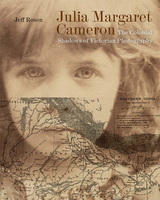
Jeff Rosen,
Julia Margaret Cameron: The Colonial Shadows of Victorian Photography.
New Haven: Paul Mellon Centre for Studies in British Art and Yale University Press, 2024.
282 pp.; 101 color illus.; bibliography; notes; index.
£45.00 (hardcover)
ISBN: 9781913107420
The nineteenth-century photographer Julia Margaret Cameron is hot property. Twenty-first-century viewers are drawn to her albumen prints for their evocative subject matter and distinctive material qualities. In 2015, the bicentenary of Cameron’s birth saw many events celebrating her work, including the major exhibition Julia Margaret Cameron at the Victoria and Albert Museum in London, which ran from November 2015 to February 2016. Opening at the Art Gallery of New South Wales, Sydney, in August 2015, the exhibition included Cameron’s photographs that had entered the collection of the South Kensington Museum during her lifetime. Running simultaneously with the show at the V&A, Julia Margaret Cameron: Influence and Intimacy at London’s Science Museum (September 2015 to March 2016) focused on the photographer’s Herschel Album (1864). Cameron compiled the album of sixty-four images, saved for the nation in 1975 following an export ban, as a gift for her friend, the scientist Sir John Herschel. But recognition of Cameron’s legacy did not stop there. In 2018, Victorian Giants: The Birth of Art Photography, an exhibition at the National Portrait Gallery in London, identified Cameron as a “giant” along with her contemporaries Lewis Carroll, Oscar Rejlander, and Clementina Hawarden. In 2021, Malcolm Daniel, Curator of Photography at the Museum of Fine Arts, Houston, revealed their acquisition of Cameron’s Norman album (1869), containing seventy-five of her prints that she assembled as a gift to her daughter Julia. After UK institutions failed to match an independent valuation of £3.7 million, an export license was granted for the album, which Daniel described as “the single most extraordinary item that [he had] proposed for acquisition in more than 30 years as a photography curator.”[1] Most recently, from March to June 2024 in the exhibition Portraits to Dream In, Cameron’s work returned to the National Portrait Gallery, this time in tandem with that of Francesca Woodman, where the photographers were paired as “two of the most influential women in the history of photography.”[2]
In the context of such twenty-first century accolades and the celebrity now attached to Cameron, there has perhaps never been a better time to find an avid readership for books about her. Yet, with Cameron’s reputation secure, one might fail to remember that it has not always been so. Indeed, it would be all too easy to forget earlier criticism of, and challenges to, her photographic practice. For, while Cameron certainly enjoyed success in her own lifetime within the artistic and literary circles in which she moved and with her first museum exhibition at the South Kensington Museum in 1865, she also received prejudicial responses to her status as a woman from some in the heavily male-dominated field of nineteenth-century photography and from others in an equally male-dominated field of those writing its history. With the widescale praise Cameron now enjoys for her creative and distinctive handling of photography, it thus remains all too easy to overlook pioneering feminist scholarship from the 1980s and 1990s that radically reassessed her practice and enabled subsequent innovative approaches to her work to emerge.
Jeff Rosen’s Julia Margaret Cameron: The Colonial Shadows of Victorian Photography, exquisitely produced in large format with double-column text, will reward those wanting to encounter a substantial number of high-quality reproductions of Cameron’s albumen prints. It is a beautiful book to look at and a beautiful object to handle. Throughout, Rosen invites his readers to recontextualize and thereby question a range of accepted ways of approaching Cameron’s work. He simultaneously complicates an understanding of the aesthetic appeal of her albumen prints reproduced in his volume. Indeed, the extensive and meticulous research underpinning Rosen’s writing, together with the interdisciplinary range and considerable scope of the book, invites readers to think afresh those contexts in which Cameron conceived and created her now highly prized photographs. More specifically, Rosen’s project is to reconsider how Cameron’s distinctive albumen prints responded to and were consumed in the context of nineteenth-century British governance in India. From start to finish, the text expressly addresses Cameron’s Indian heritage and the intersections of the milieu in which she practiced photography, and the politically specific circumstances of British colonial rule in India during the 1850s and 1860s.
Underpinned as it is by some similar concerns, Julia Margaret Cameron: The Colonial Shadows of Victorian Photography might serve as a sequel of sorts to Rosen’s 2016 study, Julia Margaret Cameron’s “Fancy Subjects,” which explored “motivations” determining Cameron’s choice of particular allegorical subjects, charting the origins of those allegories in stories of national heritage and cultural identity as well as their alignment with the colonial power and dominance of mid-nineteenth-century Britain. Yet Rosen’s new book is more deeply rooted in postcolonial theory, prioritizing and constellating around particular events in India, most prominently the Uprising in 1857. His intricately mapped study is dedicated to exposing overlooked connections between British colonialism and the familial and social contexts in which Cameron pursued her photography, charting ways in which she, along with her family, friends, neighbors, and associates, responded to news and documentation of the Uprising and to British concerns over the restoration of their imperial authority. Throughout the text Rosen painstakingly demonstrates—through historical, political, art-historical, and literary analyses—the inextricability of Cameron’s photographic practice from what he calls “the greatest political threat Britain ever faced to its imperial ambitions, the momentous anti-colonial rebellion of 1857, known as the Mutiny in Britain and as the Uprising in India” (2). Rosen identifies and assesses in Cameron’s work, and in that of her contemporaries, the embeddedness and repercussions of the rebellion, situating individual photographs by her alongside works by contemporary nineteenth-century visual artists, sculptors, poets, novelists, playwrights, political economists, philosophers, and scientists, many of whom were connected, even if only peripherally, to the social circles in which Cameron operated. Cameron’s photographic practice developed, Rosen writes, “in relation to the imperial project of which she was a part” (3). His overarching claim then is that “the legacy of the war in India infused her sense of national identity and informed both her artistic practice and the narrative choices of her photography” in ways not previously considered (2).
Framed by a prologue, introduction, and conclusion, the book is divided into nine chapters grouped in threes to occupy three chronologically organized sections entitled: “Outposts of Empire,” “Cross-Cultural Encounters,” and “Allegories of Empire.” Each chapter engages interdisciplinary concerns as Rosen moves deftly between historical documents, literary texts, and—in addition to photographs—visual images of various media. As a result, this is a long and complex book. It is not one to dip in and out of, for it relies upon a narrative that builds sequentially and incrementally. While at times the analysis is overextended, the book rewards sustained reading. In his introduction, Rosen directs his reader’s attention to a postmortem photograph Cameron took of her young great-niece Adeline Clogstoun. Adeline died on June 8, 1872, following injuries sustained in an accident while playing at Cameron’s home at Freshwater on the Isle of Wight. The title, in Cameron’s hand, appears across the mount directly beneath the albumen print and reads: From death/The lovely remains of my little Adeline/died June 8th 1872/The hair quite gold. As Rosen explains, there exist four versions of Cameron’s portrait of her deceased great-niece, three of which contain different amendments: “an open window in one image; in a second, she inserted a box camera with its lens open to the light; and in a third, she arranged a framed picture, which appears to hover over the body” (12). This third version is of most interest to Rosen because, as he explains, the “framed picture” in question, a “reproductive print or photograph” of a watercolor by the military painter Orlando Norrie, depicts the child’s father, Captain Herbert M Clogstoun. The picture’s mount (as it is depicted in her albumen print) is annotated by Cameron with the words: “Her father’s charge at Madras/for which he won the/Victoria Cross” (12). This particular image is important to the trajectory of Rosen’s project as a whole since it exemplifies for him “the intersection of family, national identity, and imperialism” as “the three essential pillars that frame the foundation” of his book. These intersecting categories, he maintains, “remain persistently in the shadows as interpreted by contemporary historians.” He adds, however, that “this was not Cameron’s doing,” for “she made these relationships explicit in her imagery” (10).
There is much going on in Rosen’s discussion of the military subject’s paternal links to the dead child pictured. Indeed, his identification of those links makes for a striking introductory hook. As Rosen’s narrative progresses, the reader comes to further understand the location of the image of Captain Clogstoun in Cameron’s postmortem photograph of his daughter as emblematic of ways in which the Indian context will feature throughout the volume. Rosen then goes on to examine the presence and impact of the Indian context in unexpected relationships, in seemingly oblique situations, and in a range of material objects. However, Rosen’s claim that Cameron made “explicit” in this postmortem photograph “the intersection of family, national identity, and imperialism,” begs the reader to think about what explicitness might mean in the context of this particular image. Rosen argues that in Cameron’s portrait of her deceased great-niece containing the annotated representation of the child’s father in action at Madras, “the Indian Uprising of 1857 lies hidden in plain sight, and that the colonial relationship that yokes together family, nation, and empire is left open to viewers without reserve” (11). Yet, while Rosen traces enlightening genealogical threads here, his allusion to a type of reference exemplified by Edgar Allan Poe’s visible “purloined letter” doesn’t entirely work because Rosen is discussing a version of Cameron’s photograph that few readers are likely to have seen. Most readers will not have seen this “unique” print with its inscription, unless they have visited the Tennyson Research Centre, Lincoln, where, Rosen notes, it is “a highly prized document” (237n55), putting a rather different interpretation on the use of the phrase “hidden in plain sight.” For precisely in whose “plain sight” is, or has, this version of Cameron’s photograph been “hidden”? And in what terms might that “sight” be called “plain”? For, as Rosen further explains, it is likely this version was intended “as a gift or memento” for Cameron’s friend and neighbor, the poet Alfred Tennyson, who visited the child on her deathbed and was very affected by her loss, as Thomas Wentworth Higginson recounts.[3]
Cameron’s narrative title of the portrait as “from death” situates the image within postmortem portraiture, and a reader would be forgiven for expecting the book to address, at least briefly, its relationship to nineteenth-century postmortem photography more generally and to consider how in the four versions Cameron negotiates or challenges protocols of that genre in relation to a beloved child member of her family. Do we know, for example, who the various versions of the postmortem photograph of Adeline Clogstoun were intended for or who, in addition to Tennyson, might have viewed the version that included the print of her father? Like most postmortem photographs, would this one not have been primarily for private consumption? Such questions do not negate those vital connections to the context of the Indian Uprising that Rosen interweaves throughout his introduction. Rather, they invite consideration of how we might read Cameron’s decision to work within this challenging photographic genre in her home to produce distinctive material objects of postmortem albumen prints of her beloved niece. One wonders whether Rosen’s decision not to discuss the process of taking postmortem portraits in the domestic context is linked to analyses of Cameron’s work that he takes issue with. For, while acknowledging a body of scholarship to which his own is variously indebted, Rosen, in this introductory section, objects to criticism that he claims has overemphasized Cameron’s “maternal responses.” He states, for instance, that postcolonial “signposts have been all but ignored in the historical literature, largely because the photograph has been interpreted as an expression of Cameron’s own feminine subjectivity” (11). Perplexing as well is Rosen’s comment that “such readings privilege a modernistic embrace of artistic self-reflexivity purged of any vestige of political content”(11). For such writing on Cameron that Rosen criticizes (albeit respectfully) in his introduction is precisely “political” and has been foundational to scholarship in the field.
I dwell on the introduction because it foregrounds aspects of Rosen’s method that resonate throughout. Chapter 1, “Empire’s Children,” explores Cameron’s long friendship with Sir John Herschel, the eminent scientist and inventor of photochemical processes whom Cameron (then Pattle) and her future husband Charles Hay Cameron had each met separately while visiting Cape Town from Calcutta in 1837. In the context of a detailed discussion of British colonial expansion in India, especially the role of the East India Company—long established in Calcutta—and Cameron’s family ties to the company through the marriages of herself and four of her sisters, Rosen examines her relationship with Herschel and Lady Herschel. Focusing upon Herschel’s scientific work in Africa and its connections to Britain’s colonial expansion, the chapter examines the period prior to the Camerons’ move in 1848 from India to England. Rosen thereby demonstrates the importance of this period, before Cameron took up photography, in establishing ways in which “intertwining concerns expressing Britain’s ‘civilizing mission’ to India preoccupied” both her family and the Herschels (44). Chapter 2, which begins with Charles Cameron and Thoby Prinsep as representatives of Calcutta’s Anglo-Indian elite, goes on to provide a detailed exploration of interrelationships within the Holland Park circle. The figure of Lord Lansdowne is pivotal to the chapter as Julia Margaret Cameron gifted him an album by an unknown photographer. Rosen analyzes ways in which, during this period that predates her own photographic endeavors, Cameron variously consumed and promoted the medium, which was important in establishing her relationship to Lord Lansdowne.
It is in his third chapter, “Letters to Juley,” that Rosen deals with events of the 1857 Indian Rebellion in which sepoys rose up against their military commanders. He begins by drawing the reader’s attention to Cameron’s first mention of the “rebellion” in a letter to her daughter Juley in July of that year and proceeds to consider the terms in which “the revolt” was represented in the British press and discussed and figured by Cameron’s circle, together with ways in which the East India Company’s response “was prosecuted against an insurgency they regarded as illegitimate”(75). Unpacking various methods by which Cameron and her circle articulated the Uprising, Rosen assesses the implications of Cameron’s choice of the term European rather than English or British to refer to the “women and children” taken captive and murdered at the garrison town of Cawnpore on July 15, 1857 (70). This chapter then analyzes visual and verbal representations of the “notorious well” into which the bodies of the women and children who had been held hostage and murdered at the Bibighar were subsequently thrown. In the latter part of the chapter, Cameron’s photography emerges. Rosen projects back to the 1840s and Cameron’s acquaintance with the medium while in India, as discussed in a fascinating letter to her from Herschel about “the miraculous art of Photography” (82).
Chapter 4, “Galahad’s Homecoming,” impressively knits together painting, poetry, and Cameron’s photography. It tells the story of Arthur Prinsep, Cameron’s young nephew who as a member of the East India Company’s army was wounded in action having been called into combat from a regimental base in Lucknow. Rosen recounts the anxieties of Cameron and her extended family circle as they received news of the Uprising in letters. William Makepeace Thackeray’s poem “Arthur’s First Wound,” George Frederic Watts’s painting Sir Galahad (1860–62; Harvard Art Museums, Cambridge)—which depicts a chivalric Arthur Prinsep—Thackeray’s novels, and both Tennyson’s and Cameron’s Idylls are creatively brought together to chart complex representations of national sacrifice. Rosen’s range and nimble transitions between media make this an enjoyable interdisciplinary read in which he demonstrates, for example, contradictions implicit in Watts’s portrayal of Prinsep, given his military action in India, as the “pure and innocent Galahad” (107).
“An Indian Prince in London,” chapter 5, raises engaging questions, some drawn from Noël Paton’s painting In Memoriam (1858; private collection), which depicts a scene of British women and children awaiting their fate in a confined interior space of the Bibighar at Cawnpore. Rosen explains how criticism by British audiences of the painting’s graphic depiction of the women’s and children’s impending death caused the artist to change the original figures of armed sepoys in the top left of his painting into Scottish Highlanders, as visible in William Henry Simmons’s engraving of Paton’s painting (1862; Victoria and Albert Museum, London). The chapter also explores fascinating issues pertaining to visual and verbal representations of Iqbal al-Daula, including Cameron’s portrait of him entitled The Ex-King of Oude by Right of Birth (1865), which she took in the garden at Little Holland House. Postcolonial theory underpins Rosen’s argument, but his assessment of Cameron’s portrait appears overly emphatic in confidently determining in her subject’s expression “an element of suppressed or latent hostility, perhaps a response to the camera’s mechanical status as a covert weapon of war” (129). Might we not read his expression as inscrutable or more neutral than the one that Rosen assigns to him, conforming as it does to a stereotypical persona of a colonial subject? Rosen further claims that differences in the power relations between photographer and subject are more emphatic in Cameron’s large-scale portrait than they would have been in the smaller cartes de visite that Iqbal al-Daula had made by Hellis and Son, London. However, since these cartes have not been located, it is difficult for the reader to judge.
Chapter 6, “Blood of the Fathers,” deals with war orphans whose fathers were lost in the Crimea and in the Indian uprising. While Rosen returns to the fatherless children from Saint-Pierre’s novel Paul and Virginia that he discussed in Julia Margaret Cameron’s “Fancy Subjects,” he also draws interestingly upon the narrative of Tennyson’s immensely popular poem “Enoch Arden” (1864), with its returning fisherman turned soldier. Moreover, he situates Tennyson’s poem alongside an examination of John Everett Millais’s Peace Concluded (1856; Minneapolis Institute of Art, Minneapolis) and L’enfant du regiment (1854–56; Yale Center for British Art, New Haven), both of which deal with the effects upon children separated from their fathers by war and which attracted praise when exhibited at the Royal Academy in 1856.
“Cross Cultural Encounters,” the third of Rosen’s three overarching sections, assesses Cameron’s allegorical approach to photographic narratives familiar to her contemporaries. Chapter 8, “Betrayal and Atonement,” contains a rather over-extended analysis of Tom Taylor’s play, A Sister’s Penance, which ran at the Adelphi Theatre in London in 1866 (with Kate and Ellen Terry in lead roles), while Chapter 9 takes up Cameron’s well-known photograph, Sir John Herschel with Cap (1867). “Triumph and Mourning,” chapter 7, is especially engaging, focusing on those forms in which narratives of the war in India played out in different spheres in Britain between 1857 and 1865. Here Rosen charts examples of memorialization that emerged as the well at Cawnpore became variously “appropriated” (159). Providing a fascinating, meticulously researched account of how the location of the well at Cawnpore became “a national symbol of mourning” represented “in graphic art, sculpture, and photography,” Rosen analyzes in detail the construction of imperial iconography (159). He focuses on the ways in which—as “visual emblem” and “powerful cultural symbol”—the well came to “embody intersecting associations of national grief and pride” and “remained the centerpiece of narratives about the war in India” (159).
Toward the end of chapter 7, however, we encounter perhaps Rosen’s least persuasive reading, which draws out symbolic correspondences between photographs of Cameron’s domestic well in Freshwater and the well at Cawnpore. Heavily freighted with symbolic connections, the analysis feels a little forced and the authorial voice overly insistent. In the context of a discussion of the collaboration in 1863 between Oscar Rejlander and Cameron picturing housemaids by her well, Rosen introduces Cameron’s “own photograph of a woman at a well,” which in 1864 she included in the first Herschel album, and below which she included the word farewell. The photograph represents a solitary figure, which Rosen considers distinct from those pictured in the 1863 group compositions. In chapter 8, Rosen goes on to discuss how three years later Cameron “reconceived the image once more” (176) as At the Well, A Farewell, when in 1867 she “refreshed” the Herschel album (196–97). The discussion of the versions of the image in chapters 7 and 8 is highly complex and potentially confusing. Rosen interprets the reassembled final page of the Herschel album, where At the Well, A Farewell appears below a detail from Cameron’s May Day (1866) and above a detail from her Turtle Doves (1864), as an allegorical image of mourning evocative of Cawnpore.
He identifies the covering on the downward-tilted head of the female in Farewell as a white widow’s cap, but it feels rather a stretch to interpret this figure posed at the domestic well at Cameron’s house in Freshwater as a figure of mourning. To be persuaded by Rosen’s reading one would have to accept a chain of tenuous connections—namely, that a servant’s cap has been replaced by a mourning or widow’s cap and that ropes (barely recognizable) used to lower a bucket into a well connote, by association, the well at Cawnpore. It is impossible for a reader to differentiate the white shape of the cap worn here from those worn by the maids Rejlander and Cameron pictured in 1863. Rosen states that “the costume is entirely different” (176), but it is not. Although the model’s head has been differently positioned, this model is surely the same one that holds a pitcher in At the Well. Moreover, given that the gown of Cameron’s female figure has an embossed sleeve while articles of Victorian mourning clothing were generally made in fabrics, frequently crepe, that did not reflect light, it is difficult to recognize mourning dress in this image. But more to my point here is that to seek to find, to specify, mourning garments in this image is to disregard photochemical qualities and to downplay more abstract effects of the headdress worn by the print’s subject. Its ethereal and intensely glowing shape does not resolve itself into a recognizable style of Victorian millinery, an emblem of mourning etiquette as Rosen reads it. As do other objects in albumen prints by Cameron, this “cap” dazzles the eye of the viewer.
Thinking about dazzling light in this image in the context of the “shadows” of Rosen’s title, the seminal touring exhibition Julia Margaret Cameron, 1815–1879 that opened at the John Hansard Gallery in March 1984 immediately comes to mind. Viewing Cameron’s photographs in the then intimate, low-ceilinged space of the Hansard before its relocation in 2018, it was impossible not to marvel at the patches of intense light appearing as if emitted from her albumen prints. Yet equally striking were their depths of shadow, which evoke the vocabulary of emerging photographic processes, especially conspicuous in William Henry Fox Talbot’s “On the Art of Fixing a Shadow.”[4] While the “shadows” of Rosen’s title are key to his study, the nineteenth-century photochemical resonance of the term “shadow” is not the primary figurative sense of the word under discussion in the book. Instead, the metaphorical “shadows” to which Rosen alludes largely denote those cast by and obscuring the brutality and shame of colonialism in the Indian context. While his book assiduously addresses the perpetual and weighty presence of those shadows cast by colonialism, conceptual resonances of shadows as embodied in the physical, photochemical nature of the photographic image do not come fully into play. At times, the photochemical status of a particular photographic image gets lost, subsumed in the wealth of visual media under scrutiny.
That those more abstract, hesitant aspects of the photographic medium are not a priority may be owing to Rosen’s wish—as he explains it from the outset—to “re-examine Cameron’s photography as a form of narrative history writing and, as a result, to recentre the question of artistic influence from the ‘fine art tradition’ to the impact of colonialism” (8). But are these mutually exclusive, and where does one situate abstract photochemical characteristics not captured by “narrative history writing”? Such questions, to be fair, are generated by Rosen’s impressive engagement with copious material and by his meticulous scholarship as plainly evident throughout the book. Overall, Rosen’s major study joins and will further facilitate influential interdisciplinary work on Cameron’s photography. With its impeccable research into the colonial ties of Cameron’s family and multiple connections within the wider social milieu in which she produced her albumen prints, Julia Margaret Cameron: The Colonial Shadows of Victorian Photography will newly inform and inspire readers to further engage Cameron’s and her contemporaries’ associations with India.
Notes
[1] Michael Pritchard, “MFAH Acquires Cameron’s ‘Norman’ Album,” British Photographic History, September 18, 2021, https://britishphotohistory.ning.com/.
[2] “Francesca Woodman and Julia Margaret Cameron: Portraits to Dream In,” National Portrait Gallery, accessed January 21, 2025, https://www.npg.org.uk/.
[3] Thomas Wentworth Higginson, Cheerful Yesterdays (Boston: Houghton, Mifflin and Co., 1898), 295–96.
[4] William Henry Fox Talbot, “On the Art of Fixing a Shadow,” in Some Account of The Art of Photogenic Drawing, or the Process by which Natural Objects may be made to Delineate Themselves Without the Aid of the Artist’s Pencil (London: R. and J. E. Taylor, 1839), 6–7.