Volume 24, Issue 1 | Spring 2025

Konstantin Korovin’s Borderline Modernism: Vanguard Art and Imperial Expansion
Between 1895 and 1900, Moscow-born artist Konstantin Korovin (1861–1939) received two major commissions: the first, from philanthropist and railway tycoon Savva Mamontov, to depict the Arctic north for a fair in Nizhny Novgorod, and the second, from the imperial government, to represent the Russian Empire’s colonized geographies at the Universal Exposition of 1900 in Paris. Rather than continuing to compare Korovin’s art to Western modernists, which has garnered him the status of a second-rate “Impressionist,” this article considers the two commissions against the backdrop of Russian territorial expansion. It demonstrates that their modernist aesthetic arose in relation to uncompromising attempts to expand the empire’s railroad network, and argues that the emergence of a Russian artistic avant-garde intersected with the Empire’s study, maintenance, and representation of its borderlands.
DOI
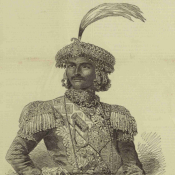
Copying Elites: The British Illustrated Press, Indian Portraiture, and Alienated Labor
This article examines images in mid-nineteenth-century British illustrated newspapers and their practice of copying or borrowing forms, compositions, conventions, and motifs from Indian portraiture. It places portrait art from India and wood-engraved images in newspapers into conversation and presents two arguments: in recycling images from portrait art, newspapers were borrowing styles of visual referencing and replication that were standard practice in late eighteenth- and nineteenth-century portraiture in India; and practices of copying across media and between India and Britain led to the erasure of the large army of both Indians and Britons who did the work of replication or translation.
DOI
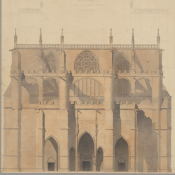
“Achever ce monument dans son caractère primitif” (“complete this monument in its original character”): The Genesis and Failure of Viollet-le-Duc’s Project to Complete the Church of Saint-Just in Narbonne
In France during the July Monarchy (1830–48), the nation’s heritage authorities initiated several projects to complete unfinished medieval churches. Many of these projects fall into a gray zone between restoration and new construction which challenged their successful outcome. This article focuses on one example of this type of project: the completion of the Church of Saint-Just in Narbonne, undertaken by the French architect Eugène Emmanuel Viollet-le-Duc between 1838 and 1842, at the beginning of his career. After only a few years, Viollet-le-Duc began to oppose the project, eventually disavowing it altogether. Previously unpublished archival materials illuminate the practical, political, and theoretical reasons for his decision.
DOI
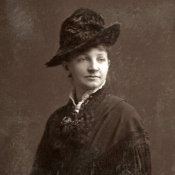
Women in the Nineteenth-Century Art Market: The Case of Helene Schemel
This article focuses on the female art dealer and artist’s widow Helene Schemel (1850–1907), who traded in paintings and watercolors by artists of The Hague School between 1893 and 1907. She established her own business in 1893, which she continued and renamed Maison Artz after her second marriage. The article explores Schemel’s life and activities, how she conducted business, and the strategies she used to navigate the national and transatlantic markets. It also places Schemel in the broader context of the art market in The Hague.
DOI
New Discoveries
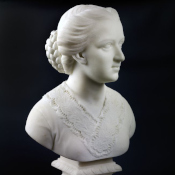
Edmonia Lewis, Bust of Helen Ruthven Waterston, 1866
 
DOI
Practicing Art History
A Perspective from the Archives
 
DOI

Supported by:

Reviews
Book Reviews
Exhibition Reviews