Передвижники (Peredvizhniki; The Wanderers)
Reviewed by Maria ChukcheevaMaria Chukcheeva
Higher School of Economics
Email the author: maria.chukcheeva[at]gmail.com
Citation: Maria Chukcheeva, exhibition review of Передвижники (Peredvizhniki; The Wanderers), Nineteenth-Century Art Worldwide 24, no. 3 (Autumn 2025), https://doi.org/10.29411/ncaw.2025.24.3.18.
This work is licensed under a Creative Commons Attribution-NonCommercial 4.0 International License  unless otherwise noted.
Your browser will either open the file, download it to a folder, or display a dialog with options.
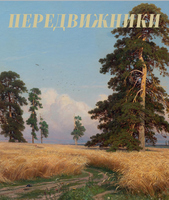
Передвижники (Peredvizhniki; The Wanderers)
The State Tretyakov Gallery, Moscow
October 30, 2024–April 6, 2025
Catalogue:
Tatiana Karpova and Tatiana Yudenkova, eds.,
Peredvizhniky. Katalog vystavki. (The Wanderers. The Exhibition Catalogue).
State Tretyakov Gallery, 2024.
464 pp.; 429 color illus.; index; selected bibliography.
Available in Russian with a summary and full list of exhibited works in English.
4500.00 RUB (hardcover)
ISBN: 9785895804322
Active from 1870 to 1923, the Society of Traveling Art Exhibitions (Tovarishestvo peredvizhnykh khudozhestvennykh vystavok), commonly known as the Peredvizhniki (The Wanderers or The Itinerants), was a significant phenomenon in Realist art during the late Russian Empire and early Soviet era. Incorporating prominent artists from Moscow, Saint Petersburg, and other regions of the Russian Empire, its shows transformed the artistic scene that had previously been dominated by annual exhibitions of the Imperial Academy of Fine Arts or occasional shows organized by private societies (notably the Society for the Encouragement of Artists) or individuals. The name Peredvizhniki derives from the Russian verb for “to move around” or “to travel” and the expression peredvizhnya vystavka (traveling exhibition). Each year, the Peredvizhniki traveled with an exhibition of paintings from one city to another, driven by a desire to extend the market for their paintings on the one hand and, on the other, by the hope of acquainting regional audiences with the latest trends in Russian art. Between 1870 and 1923, the Peredvizhniki organized forty-eight exhibitions in Saint Petersburg, Moscow, and other cities of the Russian Empire, including Kyiv, Kharkiv, Odesa, Saratov, Kazan, and Riga. They also sought to showcase the evolution of Russian art in Paris, London, and Constantinople (now Istanbul). Although these plans were never realized, the society did organize an exhibition in Prague in 1900 (16).
Each period of Russian history has read the Peredvizhniki through the prism of its own political biases and aesthetic preferences, and our understanding of their nature and significance has largely been weighed down by ideological baggage. The Tretyakov Gallery’s exhibition, however, provided the opportunity to take a new look at their history, challenging both Soviet and modern interpretations of the Peredvizhniki as mere rebels against monarchy or commercial artists, and instead presenting them as driven by Russian philosophy and Orthodox culture, both of which laid the groundwork for avant-garde experiments.
Mythologized (mis)conceptions of the Peredvizhniki began with Vladimir Stasov and continued after the Revolution of 1917 in the writings of Soviet art historians who characterized their exhibitions as the face of a truly national art. Stasov was one of the most notable music and art critics in the Russian Empire, albeit an ambiguous figure. Both a nationalist and a monarchist, he favored a utilitarian aesthetic and believed that artists should develop democratic art. He actively supported the society and his critical notes—in which he regarded the Peredvizhniki as proponents of the true realism that he considered to be synonymous with Russian national art—affected how the group was understood during the Soviet era. Thus, the Peredvizhniki came to be seen as the antagonists of the Imperial Academy of Fine Arts and of academic art principles. Scholars have traced the society’s beginnings to the Revolt of the Fourteen in 1863, when a group of students at the Imperial Academy refused to paint the mythological theme The Feast of Valhalla and opted out of the contest for the Large Gold Medal, which offered a fellowship for travel abroad. These fourteen students founded the Saint Petersburg Artel of Artists, which existed until 1871. But most of the artists who founded the Society of Traveling Art Exhibitions in 1870 (including representatives from Saint Petersburg and Moscow) had not been part of the Revolt of the Fourteen. In fact, the foundation of the society and the Revolt of the Fourteen were largely unrelated,[1] and the society’s antagonism toward the Imperial Academy was greatly exaggerated. If Stasov laid the groundwork for reading the Peredvizhniki as rebels and true nationalist artists, the Peredvizniki were linked to 1860s revolutionary democrats like Vissarion Belinsky or Nikolai Chernyshevsky after the October Revolution of 1917. During the Soviet era, their art was closely tied to the Narodniks, a Russian movement among the intelligentsia that opposed the monarchy. This stereotypical view of the Peredvizhniki emphasized the works that depicted the suffering of the people. During the Stalin era, their art played a crucial role in shaping Socialist Realism, and they were effectively canonized alongside Russian writers Alexander Pushkin and Leo Tolstoy. Well into the late Soviet era and even beyond, their work and activities were interpreted exclusively from an ideological point of view, and their paintings reproduced in school textbooks, on postcards, and on candy wrappers.
Interest in the Peredvizhniki among international audiences began in the late 1970s, following the publication of US art historian Elizabeth K. Valkenier’s groundbreaking monograph Russian Realist Art: The State and Society: The Peredvizhniki and Their Tradition.[2] This book was the first to review the ideological clichés of the Soviet era and reinterpret the Peredvizhniki’s art. Valkenier demonstrated how Soviet ideology even went so far as to falsify the history of the Traveling Art Exhibitions, showing that the society’s members held various political views that changed over time. Not only were they not all opposed to the monarchy, as Soviet art historians had claimed, but Alexander III attended all their exhibitions and even purchased their works. This is not to deny that many of their works carried political messages: they did indeed criticize social conditions and some aspects of the political regime, but their subjects were by no means limited to the Russian people and their miseries.
Two large shows dedicated to the Peredvizhniki have been held outside of Russia. In 1990, the Dallas Museum of Art presented The Wanderers: Masters of 19th-Century Russian Painting: An Exhibition from the Soviet Union with the support of the USSR’s Ministry of Culture. This exhibition introduced the wider US public to the works of Ilya Repin, Nikolay Kasatkin, Ivan Kramskoy, and other Peredvizhniki.[3] Then came another project, presented at the National Museum in Stockholm and the Kunstsammlung Chemnitz in 2011–12. The exhibition, The Peredvizhniki: Pioneers of Russian Painting, was organized by Per Hedström, curator of the National Museum, and David Jackson, a specialist in Russian Realist art and author of the notable monograph The Wanderers and Critical Realism in Nineteenth-Century Russian Painting (2006).[4] However, unlike the recent exhibition at the Tretyakov Gallery, the show in Sweden and Germany went beyond works that had been presented at the Peredvizhniki’s exhibitions. It included, for instance, one of Repin’s most iconic works, Barge Haulers on the Volga (1873; The State Russian Museum, St. Petersburg). This painting is a brilliant example of Russian realism, but Repin was not a member of the society when he created it.[5]
It is only recently that any attempt has been made in Russia to reconsider the Peredvizhniki. In 2015, Andrey Shabanov published his work on the group in the context of institutional art history, Peredvizhniki: Mezhdu kommercheskim tovarishchestvom i khudozhestvennym dvizheniem (Art and Commerce in Late Imperial Russia), demonstrating that society members were often driven by commercial interests rather than pure altruism or educational aims.[6] Shabanov also raised an important question regarding their success in Tsarist Russia during the reigns of Alexander II and Nicholas II, contrasting it with the group’s reputation as opponents of the monarchy. Shabanov’s book has sparked heated debate among Russian art historians, many of whom are unwilling to accept his socioeconomic interpretation. The Moscow exhibition in 2024–25 continued this discussion.
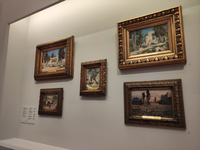
2021 marked the 150th anniversary of the Peredvizhniki’s first exhibition, which opened on November 29 (December 11 by the Gregorian calendar) 1871, at the Imperial Academy of Fine Arts. This important anniversary was supposed to have been marked by a jubilee exhibition at the Tretyakov, but ongoing construction on a new museum building on the Kadashevskaya Embankment led to its postponement. Instead, the Tretyakov organized an international scholarly conference entitled The Partnership of Traveling Art Exhibitions. On the 150th Anniversary of the Foundation,[7] which, according to curator Tatiana Yudenkova, informed the concept underlying the present exhibition. Thus, the history of the Tretyakov Gallery’s new spaces opens with an exhibition about the Peredvizhniki. Indeed, the core of the Tretyakov Gallery’s collection consists of outstanding works by the Peredvizhniki, not least because the gallery’s founder, Pavel Tretyakov, followed the society’s activities, supported their art, and purchased paintings at their exhibitions (fig. 1).
This exhibition was the most impressive showcase of the Peredvizhniki’s art in fifty years, since the gallery marked the hundredth anniversary of the society with a series of exhibitions in 1971 and 1972.[8] But much has happened in the past fifty years. After the fall of the Soviet Union, the Peredvizhniki’s art has largely been ignored by scholars in Russia and the countries of the former USSR. In recent years, Russian art historians have concentrated on the visual culture of the Silver Age and the avant-garde, research into which had previously been hindered by ideological concerns since the campaign against formalism that began in 1936. By the 2020s, the art of the Peredvizhniki had become a dusty classic that bored many people; it was important to the curators that the dust be blown away, that the Peredvizhniki be liberated from Soviet stereotypes, and that the significance of their art be restored (8–9). More widely, the central goal of the exhibition was to rehabilitate Russian Realist art, which has always been strongly associated with the Peredvizniki.
These aims are ambitious and utterly justified, but did the exhibition succeed in offering a new perspective on their art? Certainly, it presented the society as a more diverse artistic group in contrast to the Soviet-era view of them as genre painters who raised important social questions. The show made clear that they worked across genres and that their paintings had various messages. They were not Realists in any simplistic sense, and they depicted much more than misery. Striking examples of how the Peredvizhniki do not universally fit the Soviet view include the works of Konstantin Makovsky who painted portraits of aristocrats and bonny children (notably Mr. Balashoff’s Children [1880; Rybinsk State Museum of History, Architecture and Fine Arts, Rybinsk]), works that focused on religious subjects or themes from Slavic mythology. Thanks to this exhibition, the public could see that the group was more diverse, meeting their expectations and varied tastes.
The exhibition and catalogue cover the period from the society’s foundation in 1870 to the crisis within the artistic group in 1903. By the late nineteenth and early twentieth century, it was extremely difficult to become a member of the Society of Traveling Art Exhibitions: by that time, the society’s founding members were painfully aware of the experiments of a younger generation of Russian artists, and they were reluctant to accept new members. Indeed, they often rejected paintings that employed a new formal language. This led to a group of young artists establishing the Union of Russian Artists (Soyuz Russkikh Khudozhnikov) in 1903; the group remained active until 1923 and was intended to replace the Society for Traveling Art Exhibitions. Unlike the artistic community of the Peredvizhniki who chose works for exhibition, the younger artists wanted to show their works without a jury. The final period of the Peredvizhniki’s activity—when the society had declined and its art had joined the mainstream—was beyond the scope of the exhibition project.
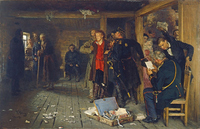
The exhibition featured 150 paintings from Russian museums, not only from those in Saint Petersburg and Moscow, but also other regions and cities as well. The work discussed in the catalogue was still more wide-ranging. It included, for instance, llya Repin’s radical Arrest of a Propagandist (fig. 2), which was absent from the show itself. This painting is strongly associated with the Soviet image of the Peredvizhniki as followers of the Narodniks, but it is also markedly relevant today. This work was not presented at the Peredvizhniki’s exhibitions due to tsarist censorship. It is also possible that censorship is responsible for its absence in this recent display. It is, notably, in the Tretyakov Gallery’s collection, so its inclusion was surely feasible and would have added radicalism to the exhibition.
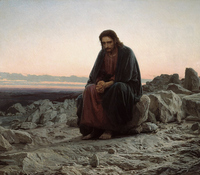
The exhibition included sections on the relationship between metaphysics and reality, daily life, the ideal of personality, landscape, and the transition into the twentieth century. The exhibition opened with a reconstruction of the inaugural Peredvizhniki exhibition of 1871, as well as a series of portraits depicting the most notable members of the group. At the core of the exhibition was a metaphysics and reality section that included notable Peredvizhniki paintings with philosophical themes. This section featured several important paintings, including Repin’s Religious Procession in Kursk Province (1880–83; State Tretyakov Gallery, Moscow) and Vasily Surikov’s The Morning of the Streltsy Execution (1881; State Tretyakov Gallery, Moscow). The former is a social portrait of the reign of Alexander III, offering a critical view of its mores. The latter depicts one of the most tragic moments in Russian history: the result of Peter the Great’s reforms. The section also included Ivan Kramskoy’s Christ in the Desert (fig. 3) and Mikhail Nesterov’s Hermit (fig. 4), both of which the curator interpreted through the lens of Russian religious thought. Obviously, both paintings had deep philosophical significance, but while Nesterov’s work was influenced by Fyodor Dostoevsky’s novels and Russian religious philosophy, Kramskoy’s painting represents Christ’s reflection on humanity, a topic that does not entirely fit into the category of religious thought. The last section showed paintings that the society’s members had rejected despite their use of modern visual language. The other, less impressive sections were built on genre principles in which paintings were exhibited as a series of portraits and landscapes, or divided into thematic groups such as everyday life, the question of women, and so on.
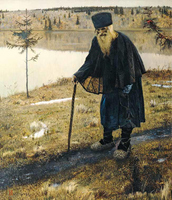
Despite this apparent underlying structure, the purpose of the exhibition remained unclear because of several factors. First, the display revealed the difficulty of filling the new, enormous premises, which would challenge any curator. Second, the curators wanted to create a unified image of the Peredvizhniki as thinkers, while the display included paintings from different times and political and cultural contexts, and, of course, members of the society had varying views on the roles of art and politics, not to mention different perceptions of reality. Third, some notable works were not included: for instance, Repin’s Ivan the Terrible and His Son (1885; State Tretyakov Gallery, Moscow), which suffered damage in 2018 at the hands of a drunken visitor, was still undergoing conservation.[9] Other pieces from museums outside of Moscow, such as Vasily Polenov’s Christ and the Sinner (1887; State Russian Museum, St. Petersburg), were too large to be transported. Fourth, the idea that the Peredvizhniki paved the way for the Russian avant-garde was not entirely convincing. The exhibition concluded with landscapes by Arkhip Kuindzhi, who had a reputation as the first Russian Impressionist. His artistic approach, however, has little in common with that of the Impressionists, and his landscapes are far removed from avant-garde experimentation. It should also be noted that Kuindzhi resigned from the society in 1880, and his most iconic works, such as Moonlight Night on the Dnieper River (1880; State Russian Museum, St. Petersburg), were created after he left.
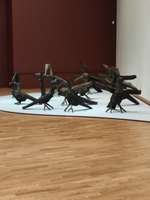
Tatiana Yudenkova emphasized the importance of demonstrating the close relationship between the Peredvizhniki and contemporary visual culture in Russia,[10] but the only contemporary object in the exhibition was a sculpture by Nikolai Polisski—The Rooks Have Returned (fig. 5), which was a replica for the exhibition. The original was created for the Archstone (Archstoyanie) Russian land art festival in Nikola-Lenivets in 2008. It is a homage to Alexei Savrasov’s eponymous painting (1871; State Tretyakov Gallery, Moscow), often viewed as the embodiment of Russian national landscape painting. Polisski’s sculpture brought the exhibition to life, but it did not emphasize the radicalism of the Peredvizhniki and their role in Tsarist Russia. The Peredvizhniki’s influence on contemporary visual culture is much wider, as was stressed in Tatiana Yudenkova’s catalogue essay, which mentioned artists such as Eric Bulatov and Tatiana Korotkova, who have derived inspiration from the Peredvizhniki’s art (12).
Yudenkova presents the Peredvizhniki as an artistic group akin to the Nazarenes or the Pre-Raphaelites, echoing the idea put forward in the Soviet era that it was a brotherhood or fellowship. This is not quite historically accurate, as Shabanov stressed that the society was not based on family-friendly values but was instead a partnership that reflected a business structure.[11] As early as the 1920s, Marxist Soviet art historian Alexey Fyodorov-Davydov drew attention to the economic reasons for the society’s foundation, although his views found no support among the professional community. Yudenkova also believes that the Peredvizhniki sought to demonstrate truth through art—that they shared the idea of the transformation or perfection of the world as conceived by Russian philosopher Vladimir Soloviev, a goal that was ignored or discredited during the Soviet era. But her argument that the Peredvizhniki had high spiritual values finds no reflection in the society’s official documents (12–30). According to Yudenkova, the Peredvizhniki were not rebels; rather, they were either conservatives or moderate liberals (26).
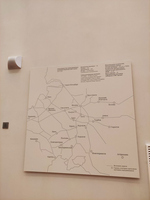
Complementing the display of paintings was a multimedia project that was, perhaps, more impressive than the main part of the exhibition. Created to reflect the extensive research being undertaken, it contained many interesting and important documents, among them a list of votes for paintings put forward for exhibition, an impressive timeline detailing the society’s activities, and a reconstruction of the routes their exhibitions took (fig. 6). It also demonstrated how the Peredvizhniki’s work came to be at the heart of the Tretyakov Gallery’s collection. Unfortunately, many visitors passed by this part of the exhibition due to the difficulty of navigating through the new building.
For all its undoubted achievements, the exhibition revealed the persistence of significant, unresolved issues in the study of Russian art. The professional community is, by and large, not prepared to examine the art of the Russian Empire through social and economic lenses. Art is considered a lofty activity, far removed from ordinary concerns, commerce, and bias. This is nothing new: if, during the Soviet era, the Peredvizhniki were discussed as altruists and enlighteners, they are now considered metaphysicians and philosophers. Whatever new view of the Peredvizhniki the exhibition offered, it is not derived from a complete reassessment of them as individuals or as a society, but from a shift in emphasis—a new mythologizing required by modern-day political circumstances in Russia.
Acknowledgments
This review was completed as part of the Basic Research Program at the National Research University Higher School of Economics (HSE University).
Notes
[1] See Andrey Shabanov, Art and Commerce in Late Imperial Russia: The Peredvizhniki, A Partnership of Artists (Bloomsbury Academics, 2019), 17–19.
[2] Elizabeth Valkenier, Russian Realist Art: The State and Society: The Peredvizhniki and Their Tradition (Ardis, 1977).
[3] See Elizabeth Kridl Valkeiner, The Wanderers: Masters of 19th-Century Russian Painting: An Exhibition from the Soviet Union, exh. cat. (Dallas Museum of Art, 1990).
[4] David Jackson, The Wanderers and Critical Realism in Nineteenth-Century Russian Painting (Manchester University Press, 2006).
[5] See Inessa Kouteinikova, exhibition review of The Peredvizhniki: Pioneers of Russian Painting, Nineteenth-Century Art Worldwide 11, no. 3 (Autumn 2012), https://www.19thc-artworldwide.org/.
[6] Andrei Shabanov, Peredvizhniki: Mezhdu kommercheskim tovarishchestvom i khudozhestvennym dvizheniem (Press of the European University of St. Petersburg, 2015); Published in English as Andrey Shabanov, Art and Commerce in Late Imperial Russia: The Peredvizhniki, a Partnership of Artists (Bloomsbury Visual Arts, 2019).
[7] Tatiana Yudenkova, ed., Tovarishestvo peredvizhnyh hudozhestvennyh vystavok. K 150-letiju so dnja osnovanija. Materialy Mezhdunarodnoj nauchnoj konferencii. (Gosudarstvennaya Tretyakovskaya Galereia, 2022).
[8] Tretyakov Gallery, The Life of the Museum from 1945 to 1986, accessed September 1, 2025, https://www.tretyakovgallery.ru/.
[9] On this case and the restoration, see Matthew Bodner, “Ivan the Terrible Painting ‘Seriously Damaged’ in Pole Attack,” The Guardian, May 27, 2017, https://www.theguardian.com/; and “Repin Painting Returns to Moscow’s Tretyakov Gallery Nearly 7 Years After Vandal Attack,” The Moscow Times, December 16, 2024, https://www.themoscowtimes.com/.
[10] Ekaterina Zaitseva “V Tret’jakovskoj galeree otkrylas’ glavnaja vystavka goda—‘Peredvizhniki,’” Rodina, October 30, 2024, https://rodina-history.ru/.
[11] Shabanov, Art and Commerce.