Volume 25, Issue 3 | Autumn 2026

God Is in the Detail: Reception and Revelation in Joseph Noel Paton’s Dawn: Luther at Erfurt
Joseph Noel Paton’s Dawn: Luther at Erfurt (1861) transforms an obscure moment of spiritual struggle into an ambitious experiment in Victorian history painting. This article argues that Paton structured the canvas through inscriptions, heraldic emblems, and orchestrated light to direct viewers through a process of discovery in which revelation is performed rather than represented. Long before reception aesthetics was formally theorized, the painting mobilizes the interplay of illusion and materiality to produce a self-reflexive spectatorship linking historical understanding to perception. Situating Paton within transnational religious, artistic, and intellectual networks, the article reconceptualizes Pre-Raphaelite history painting as a site for experimenting with innovative viewer engagement.
DOI
Transgressive Masculinity: Virility, Violence, and Eroticism in William Bouguereau’s Dante and Virgil in Hell
This article examines William Bouguereau’s Dante and Virgil in Hell (1850) through the lens of masculinity studies, reading it as a destabilizing commentary on accepted standards of nineteenth-century masculinity. In the painting’s central group of the fighting damned, the artist constructed a highly physical, violent, and erotically charged vision of manhood that subverted contemporary aesthetic and social ideals of masculinity and, as such, was meant to be condemned. This moral message is, however, undermined by the painting’s visual valorization of its transgressive protagonists, resulting in an ambivalent image that attracts the viewers’ admiring gaze to the spectacular male bodies on display, even as it tries to caution them against the dangers of such ambiguous attractions.
DOI

Vignettes as Iconotextual Crossings in Nineteenth-Century Arctic Narratives
This article examines vignettes as “iconotexts,” a term coined by the literary theorist Liliane Louvel to describe a unique collaboration of image and text that precipitates a third, nonbinary value in a reader/viewer’s relationship with an illustrated text. Focusing on iconotexts as they are manifested in vignettes and cognate forms such as sketches, illustrations, and scenes, it examines five examples in a prime field of their deployment: illustrated narratives of Arctic voyaging in the nineteenth century. These new readings of vignettes proclaim an augmented role for nineteenth-century illustrated narratives in the field of polar art history.
DOI
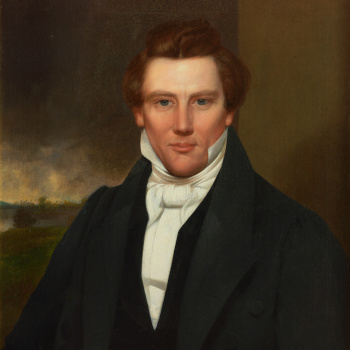
Divergent Approaches to the Portrait of Joseph Smith by David Rogers: Historical Context and Reception
David Rogers’s portrait of Joseph Smith, painted in 1842, has long been regarded by followers of Latter-day Saints as an authoritative likeness. By integrating art historical methods with reception theory, this article examines divergent interpretations of the portrait, highlighting the significance of nineteenth-century religious images today. An art historical analysis reveals how Smith utilized the portrait to advance his political ambitions. The article also explores conflicting religious understandings of the portrait: In the past, Community of Christ viewers understood the portrait as evidence of Smith’s monogamous marriage and the legitimacy of his hereditary leadership, whereas members of the Church of Jesus Christ of Latter-day Saints interpret it as an “enchanted” reflection of Smith’s prophetic status.
DOI
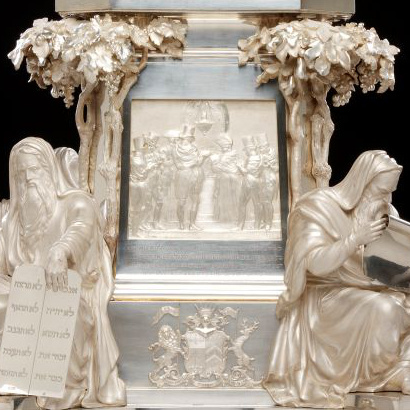
A “Kind of Miniature Monument”: The Montefiore Testimonial (1842–43) and Anglo-Jewish Imperial Identities
The Montefiore Testimonial is a silver sculpture commemorating Sir Moses Montefiore’s role in securing the freedom of several Ottoman-Syrian Jews accused of blood libel during the Damascus Affair of 1840. This article links the Testimonial’s biblical iconography to Jewish interpretations of the Hebrew Bible to explore the complicated and, at times, contradictory formation of Anglo-Jewish identity. The Testimonial stages layered reflections on emancipation, cultural assimilation, and belonging that resonated differently to Jewish and non-Jewish audiences. This analysis reveals how biblical narratives were essential to Jewish and non-Jewish definitions of national and imperial identity in the Victorian era.
DOI
Practicing Art History
Painting Conservation and Art Historical Practice
 
DOI

Supported by:

Reviews
Book Reviews
Exhibition Reviews