A Flood of Pictures: The Formation of a Picture Culture in the United States by Michael Leja
Reviewed by Joshua BrownJoshua Brown
Professor of History Emeritus, The Graduate Center, City University of New York
Email the author: jbrown[at]gc.cuny.edu
Citation: Joshua Brown, book review of A Flood of Pictures: The Formation of a Picture Culture in the United States by Michael Leja, Nineteenth-Century Art Worldwide 25, no. 3 (Autumn 2026), https://doi.org/10.29411/ncaw.2026.25.3.10.
This work is licensed under a Creative Commons Attribution-NonCommercial 4.0 International License  unless otherwise noted.
Your browser will either open the file, download it to a folder, or display a dialog with options.
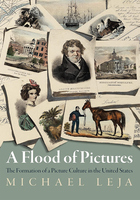
Michael Leja,
A Flood of Pictures: The Formation of a Picture Culture in the United States.
University of Pennsylvania Press, 2025.
400 pp.; 142 color illus.; notes; index.
$54.95 (hardcover)
ISBN: 9781512826807
$54.95 (eBook)
ISBN: 9781512826814
Toward the end of his A Flood of Pictures, Michael Leja remarks that fifteen years after the Civil War, pictures had become commonplace in US homes. It was a development, he writes, succinctly captured by the narrator’s description in an 1870 short story for Scribner’s Monthly of an upstate rural New York family’s post-prandial parlor activity following a Thanksgiving dinner: “Some of the party fell to looking at the books and some to turning the leaves of the photograph album, while others were using the stereoscope.”[1] The casually observed scene denoted a sociality that, in Leja’s view, was nurtured and mediated by pictures that, by the Gilded Age, had become a popular shared form of entertainment.
By the time Scribner’s launched that same year, it was the latest in a phalanx of illustrated monthly and weekly periodicals, not to mention books, that proffered news, stories, fashion, domestic tips, religious lessons, family activities, and children’s education (to name only a few topics covered). These publications comprised a significant part of a vast and variegated visual culture industry buoyed by new techniques of mass reproduction that increasingly democratized access to previously privileged viewing. In various forms and formats, pictures had become ubiquitous in the nation’s everyday life (to the consternation of some critics).
The impact of that mass visual culture industry, nurtured by advances in industrial production, ever-expanding transportation and distribution systems, and burgeoning populations and urban centers, has been largely considered by art historians and visual culture scholars as a postwar phenomenon. Consequently, the preceding period has been viewed as “an antediluvian era when pictures were rarely encountered in the daily experience of ordinary people in the United States” (5–6). In Leja’s view, however, the visual turn had a longer trajectory in what has been deemed the “long” nineteenth century. In A Flood of Pictures, he takes on the challenging task of establishing and examining the antebellum period as the locus of “a mass culture of pictures in formation” and recovering that time “before successful pictorial formulas for mass appeal were established, before an audience habituated to consumption of pictures existed, and before pictures had become thoroughly commodified” (2).
Confronting the dispersed, diverse, and uneven developments that characterized an emerging national visual culture during the thirty years prior to the Civil War, Leja wisely rejects the doomed course of a comprehensive linear history. He chooses instead to offer seven richly illustrated case studies that individually and together chronicle and analyze significant steps in the making of a progressively shared quotidian visual world. In the process, each of these studies highlights the devising of different and sometimes combined visual media in a range of formats covering diverse subjects and used for different purposes and explores how they changed ways of seeing and understanding daily life in the antebellum United States.
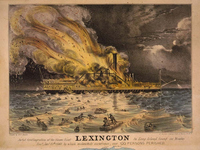
A Flood of Pictures begins with the revolution in journalism that occurred in the mid-1830s with the rise of the penny press, epitomized by two contending New York City daily newspapers, The Sun (1833) and The Herald (1835). Expanding on a rich body of scholarship, Leja delineates the papers’ stark departure from the established press, their engagement with a new audience of working- and middle-class readers that had emerged from the Jacksonian era and their content, which trafficked in controversy, sensation, and at times fantastical hoaxes. While only rarely publishing pictures, the penny papers forged alliances with publishers of single-sheet prints—primarily lithographs—and the producers of popular spectacular visual entertainments, such as Bowery dioramas. It was a lucrative, symbiotic relationship that, as Leja shows, established pictures as the mainstay for news and, for the first time, allowed diverse readers and viewers to share the visualization of news events. Much of the chapter examines performances and especially prints that depicted sensationally gruesome disasters and crimes—from the fire that destroyed seventeen blocks in lower Manhattan in 1835 to the salacious murder of Helen Jewett, a sex worker, in 1836 to the fiery Lexington steamboat disaster of 1840 (fig. 1). With great precision, Leja reveals the ways these pictures established conventions for representing such terrible events that would continue throughout the nineteenth century, while also demonstrating how such rapidly released news images were often succeeded by editions adding refinements and updated information, a process that involved readers interpreting the news.
Leja next turns to the realm of politics to explore the impact of the antebellum visual turn. His focus is William Henry Harrison’s presidential campaign in 1840, which he argues was the first time pictures played a critical role in elections, with the Whig Party’s successful use of the nation’s nascent visual mass media—particularly the suddenly expanding number of illustrated almanacs, a mainstay of rural US reading. In a departure from earlier almanacs, these campaign almanacs, along with campaign materials and press coverage, positioned the figure of the aged, elite candidate as the focal point of the contest in place of any substantive issues or ideas. Operating on many levels simultaneously, the aristocratic, urban Whigs designed a campaign with the central visual motif of the frontier log cabin, successfully coopting the Democratic Party’s effort to portray Harrison as tired, isolated, and aloof. Instead, Harrison became a symbolic “man of the people,” while other published campaign images beatified him as a selfless, generous, and still vigorous military hero. What the Harrison almanacs and other campaign visuals reveal, Leja concludes, is that the process of building unified political parties out of a heterogeneous electorate was inseparable from the process of forming a mass audience for pictures.
From the practicality of politics, Leja’s next case study considers the ways in which mass-produced pictures became an essential part of US religious and moral advocacy. Amid the employment of imagery by antebellum evangelical, temperance, and antislavery advocates to promulgate their causes, the publication of Harper’s Illuminated and New Pictorial Bible in 1843 combined its religious message with bold commercial strategies that incorporated innovations in printing technologies, industrialized paper and ink production, enhanced wood engraving workmanship, and electrotyping that all together facilitated massive editions at affordable prices. Resoundingly successful, the Illuminated Bible positioned the Harper Brothers firm at the forefront of illustrated book publishing. As Leja demonstrates, its wood engraved illustrations were critical to its success, experimenting with formats and conventions devised during the preceding decade in the house’s children’s books, which had changed how pictures were presented on the printed page. Leja closely observes the ways the choice of illustrations and their decorative framing, sizing, placement, and compositions engaged readers. Moreover, the Harper Brothers’ canny approach to the book’s concept and marketing skillfully maneuvered around the shoals of sectarian beliefs, diverse tastes, and political allegiances to reach a mass readership.
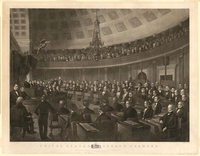
Building on his 2011 Art Journal essay, the next case study explores how the New York daguerreotypist Edward Anthony collaborated with the engraver Thomas Doney in the 1840s to produce portraits in print that appealed to a mass audience.[2] Confronted with the inability to reproduce the single-image daguerreotype plate, Anthony worked with Doney, a leading engraver of the era specializing in copying photographs. The resulting mezzotints he created not only were reproducible, but their tonal attributes also improved the decipherability and stability of “the elusive figure floating on the reflective daguerreotype plate” (175)—a hybrid image whose accuracy regarding likenesses was thus, according to Leja, “fortified” (176). With the popularity of their mezzotint portraits of notable Americans, the announcement in 1843 of the collaborators’ most ambitious project was perhaps inevitable. After much anticipation, the massive United States Senate Chamber (fig. 2) was completed in 1846, which serves as the pivot for this chapter. Reputed to be the largest print up to that time, featuring more than one hundred figures on the chamber floor and gallery, it was a landmark in transmedial reproduction. Leja meticulously examines the construction of the gathering—its constituent parts composed of autonomous daguerreotypes Anthony also sold as independent portraits—and the challenge to create a harmonious composition often contradicted by discordant positioning and poses pronouncing their photographic origin. Leja thus concludes that “disunity was arguably the natural form for a print super-fortified by photographs” (188)—a disunity that viewers seemingly accepted. It was a jarring feature repeated in reproduced, fortified group portraits well into the nineteenth century.
Portraiture occupies the next case study as well, with the essential role of the likeness in the construction of fame. Considered the first popular entertainer to achieve the status of celebrity, the Swedish coloratura soprano Jenny Lind, who toured the United States from 1850 to 1851, became a cult figure largely due to representations of her face on an astounding array of publications and commodities that situated her as the progenitor of the celebrity portrait. Contextualizing the Lind tour in the shadow of the New York Astor Place Riot of 1849 and the class and nationalist conflict over theatrical entertainments that violent event revealed, Leja examines the ways that promoter P. T. Barnum rallied enthusiasm for the artist and averted trouble through publicity events that tamped down class tensions. But, as Leja notes, “Lindomania” was predicated more on Lind’s reputed radiance and virtue than her singing. The bulk of the chapter explores how her portraits conveyed those cherished qualities through her facial features, expression, and bearing. “Effectively picturing a brilliant musical star in silent visual media would require forging subtle equivalencies,” Leja writes (213). He also shows that, in a nation unsettled by rapid change and preoccupied by pseudo-sciences such as physiognomy and phrenology that purported to reveal character and moral traits, the public’s scrutiny of Lind’s “ordinary” countenance relied on equivalencies based on the traits embodied in images of already venerated figures.
Leja next proposes that photography was not intrinsically a mass medium until that status was realized in the accomplishments of two Philadelphia brothers, Frederick and William Langenheim. Beginning in 1845, the Langenheims devised a number of innovations in landscape photography that led to its “becoming the first type of photograph to achieve mass distribution” (237). Leja offers a marvelous description of the multiple daguerreotype plates the Langenheims produced that displayed a panoramic view of Niagara Falls, a uniquely constructed presentation that was reproduced in print media and secured the brothers’ reputation both then and in the annals of photography. While continuing their panoramic work, the brothers strove to develop and import photographic technologies that improved the quality of images and allowed the reproduction of multiple copies. And with their creation of the hyalotype, the Langenheims produced the first photographic slides suitable for magic lantern shows, enabling group presentations and viewing. Displaying impressive knowledge about the medium’s growth and technical changes, Leja chronicles the brothers’ creativity and business ups and downs that, in 1854, culminated in their introduction of the stereograph to the United States—and how, through creative marketing (such as selling stereographs in collections visualizing various subjects), they vastly expanded that format’s audience. The Langenheims’ “spatially enhanced and serial presentations of renowned sites,” Leja concludes, “shaped a vicarious form of touristic seeing while they pointed one way toward photography’s mass-market future” (280).
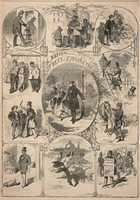
Noting the comparatively late appearance of national pictorial periodicals in the United States, most of the final chapter is devoted to Gleason’s Pictorial Drawing-Room Companion. Beginning with a survey of the “knowledge magazines” dating from the 1830s and then the pictorial miscellanies directed to female readers, Leja turns to Gleason’s, which in 1851, amid several failed pictorial news efforts, followed the model first set almost a decade earlier by the Illustrated London News. It became the nation’s first successful illustrated miscellany, maintaining that dominance for most of the decade until its demise in 1859. With no intention to cast shade on Leja’s preceding chapters, this case study is truly a tour de force: a closely observed, detailed, and much-needed evaluation of this groundbreaking weekly (pace Frank Luther Mott’s pioneering 1938 study).[3] Notably, Leja goes beyond Gleason’s entrepreneurial history and the subjects it covered to consider the innovations in its presentation of pictorial news, formatting of visual narratives, and page design that would contribute to the look and viewing experience offered in the later, better known Frank Leslie’s Illustrated Newspaper (1855) and Harper’s Weekly (1857). Prominent in the discussion about those innovations is Leja’s attention to Winslow Homer’s role as a staff artist and engraver in experimenting with ways of arranging pictures on a page, becoming “an expert [along with other staff] . . . in using decorative design motifs and creative compositional devices to compose larger pictures from smaller ones” (327). This included composite and montage techniques that transformed a clutter of images into a coherent visual narrative inviting viewers’ participation (fig. 3). Chronicling the periodical’s growth, Leja details the resources it marshalled and the extensive staff of artists, engravers, and writers it recruited as well as the progress of its issues and the news it covered from year to year—as well as the subjects it didn’t cover, its commercial success in part reliant on avoiding “controversy,” particularly the escalating conflict over enslavement.
Despite the breadth and depth of the case studies, there are of course gaps that future studies, inspired and informed by Leja’s scholarship, may explore—or explore further. One genre, briefly touched on in the first chapter, is the sporting, crime, and scandalously disreputable illustrated publications directed to male readers epitomized by the libelous “flash” weeklies and sensational National Police Gazette.[4] Another, broader genre encompasses the different formats—including single-sheet lithographs and wood engravings in often short-lived periodicals—comprising antebellum graphic humor. Divisive, derisive, and partisan, the field underwent a visual transformation by the end of the era.[5] Both of these genres, dwelling to some extent in the nether regions of the visual culture industry, may revise some of the unifying features cited in the case studies.
Some of the case studies include subjects that may be familiar to scholars and aficionados of antebellum nineteenth-century art history and cultural, social, and political history. But, in addition to Michael Leja’s immersion in the archives and scholarship and his compelling exposition, it is his method that sets A Flood of Pictures apart from many other visual histories. Leja essentially flips the narrative, acknowledging broad and specific contexts but also framing the components constituting the visual culture industry as fundamental in shaping the extensive changes and everyday life of the nation. This book is an important and original contribution to our still nascent effort to bridge the gap between art history and history—not to mention between the study of fine art and popular arts. And for historians, it convincingly demonstrates that without understanding the flood of pictures and how it was intrinsic to the “larger” developments of the era, our vision of the mid-nineteenth-century past will remain blinkered. And for this historian, who previously characterized the antebellum visual landscape as arid, I gladly recant.
Notes
[1] Edward Eggleston, “Huldah the Help, A Thanksgiving Love-story,” Scribner’s Monthly, December 1870, 189–90.
[2] Michael Leja, “Fortified Images for the Masses,” Art Journal 70, no. 4 (2011): 60–83.
[3] Frank Luther Mott, A History of American Magazines, 1850–1865 (Harvard University Press, 1938), 409–12.
[4] Patricia Cline Cohen, Timothy J. Gilfoyle, and Helen Lefkowitz Horowitz, The Flash Press: Sporting Male Weeklies in 1840s New York (University of Chicago Press, 2008).
[5] Jane E. Brown and Richard Samuel West, William Newman: A Victorian Cartoonist in London and New York (Periodyssey Press, 2008); and Evan A. Zelnik, American Laughter, American Fury: Humor and the Making of a White Man’s Democracy, 1750–1850 (Johns Hopkins University Press, 2025).