The Chosen Race: Troubling Whiteness in Victorian Painting by Keren Rosa Hammerschlag
Reviewed by Marte StinisMarte Stinis
Independent scholar
Email the author: marte.stinis[at]alumni.york.ac.uk
Citation: Marte Stinis, book review of The Chosen Race: Troubling Whiteness in Victorian Painting by Keren Rosa Hammerschlag, Nineteenth-Century Art Worldwide 25, no. 3 (Autumn 2026), https://doi.org/10.29411/ncaw.2026.25.3.18.
This work is licensed under a Creative Commons Attribution-NonCommercial 4.0 International License  unless otherwise noted.
Your browser will either open the file, download it to a folder, or display a dialog with options.
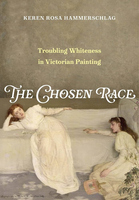
Keren Rosa Hammerschlag,
The Chosen Race: Troubling Whiteness in Victorian Painting.
University of California Press, 2026.
276 pp.; 100 color illus.; bibliography; notes.
$60.00 (hardcover)
ISBN: 9780520420953
Keren Rosa Hammerschlag’s The Chosen Race: Troubling Whiteness in Victorian Painting arrives at a time of significant scholarly interest in the mixed discourse of race, empire, and visual culture in the nineteenth century. Its central ambition is to dispute that whiteness is a stable or even self-evident category but rather a fragile aesthetic and racial construction of its time. She ranges over Victorian realist painting, history painting, Orientalism, and Pre-Raphaelite and Aesthetic artworks, and draws simultaneously on the interrelationship between Victorian racial science, theology, ethnography, and literary culture.
The introduction to The Chosen Race is, however, symptomatic of a type of indecision that is pervasive throughout the entire book. She variously describes her project as the self-fashioning of “white” Victorians (1); a broader overview of “race and racial difference generally” (6); a correction to the field’s tendency to focus on the “Other” (11); and a “book about race in which whiteness figures prominently” (6). She also posits her book as an attempt to define the fragility of whiteness “as an aesthetic and racial category” (8). These are all related but distinct ambitions, and they imply different methodological stakes and priorities. The monograph would have benefited from a more decisive statement on what the book is really about. As it stands, the introduction contains a methodological restlessness that the subsequent chapters tend to reproduce rather than resolve.
The mismatch between intended and executed arguments is acute when we consider the first chapter, which opens with the promise to “examine painterly depictions of non-white men getting down on one knee in the presence of white women,” a motif Hammerschlag reads as “both reassuringly submissive and transgressively romantic” (16). The chapter then instantly pivots to a survey of Irish and Black figures in typical Victorian realism, analyzing, at length, Ford Madox Brown, William Logsdail, Daniel Maclise, and William Powell Frith before briefly—and only in the closing pages—circling back to the kneeling motif. This promised reading of the kneeling Black figure is never articulated and is quietly displaced by another narrative. However, the narrative on Irish material is relevant on its own, as the racial ambiguity of Irish people within Victorian racial discourse is precisely the kind of contested borderland where Hammerschlag’s research shines. Irish people, poised between whiteness and Blackness in what the author calls “the space of racial greyness” (17), feature prominently here, and Hammerschlag sheds new light on the relationships among labor, gender, and the Irish working class in nineteenth-century London.
Chapter 2—on the interplay of scripture and race in Victorian painting, particularly in relation to Jewish figures—is arguably the book’s strongest. Here, Hammerschlag argues that Jews occupied a particularly unstable position within Victorian racial taxonomy, acting as “racial chameleons” related to “the age-old stereotype” of Jews as “duplicitous shapeshifters” (56) who thus “confused and complicated Victorian conceptions of whiteness” (56). That Jewish people’s ambiguous whiteness disrupted the (pseudo)sciences of racial difference of the time is well-supported and persuasive. Her readings of William Holman Hunt’s The Finding of the Saviour in the Temple (1854–60; Birmingham Museum and Art Gallery, Birmingham) and Edward John Poynter’s Israel in Egypt (1867; Guildhall Art Gallery, London) as religious and racial sites of interpretation are illuminating, and her discussion of red hair as a typical marker of both Jewishness and Irishness in Pre-Raphaelite painting is an original contribution. Hammerschlag’s observation that James McNeill Whistler’s model, Joanna Hiffernan, with her red hair and Irish heritage, could be read in racial and aesthetic terms is done almost in passing and could have been signposted more strongly in relation to her later chapter on Whistler.
Chapter 3 is devoted entirely to Edwin Long’s The Babylonian Marriage Market (1875; Royal Holloway College, London), which the author reads as a fantastical exploration of interracial coupling and an index of Victorian anxieties about miscegenation. The argument is interesting, but it is padded by extended contextual surveys of Victorian race science and ethnography that do not always connect neatly to Long’s work. Hammerschlag briefly considers Long’s series Daughters of Our Empire (1887), in which each figure of empire is personified as a distinctly racialized feminine figure. The author raises the question of mixed-race appearances in Jamaica, an argument that is, however, not pursued further. A more sustained reading could have directly connected to the book’s stated concerns with miscegenation and imperial fantasy.
Chapter 4, on mothers and racial inheritance, promises to examine “pictures of mothers and children for what they” reveal “about racial inheritance” and to “reinsert hidden white, near-white, not-quite-white, and non-white men—artists, fathers, biologists, policymakers—back into the picture” (117). In practice, however, the chapter predominantly focuses on white British children and their mothers, with the latter claim being more rhetorical than analytical. The discussion of Fanny Eaton, the Jamaican-born model for many Pre-Raphaelite works, is particularly compelling in this chapter, and Hammerschlag’s argument that Simeon Solomon’s The Mother of Moses (1860; Delaware Art Museum, Wilmington) functions as a veiled self-portrait, conflating Jew and Jamaican in the figure of Eaton, is provocative. Yet the chapter’s analytical depth is uneven; Hammerschlag will pursue one line of argument carefully, only to abandon it for analyses of paintings whose connection to the chapter’s central claims are gestured at rather than actively illustrated. Her description of a Dante Gabriel Rossetti sketch of Eaton as revealing “exoticism” because of the hair and eyes is a description offered without interrogation, while the discussion of Rossetti’s The Beloved (1865–66; Tate Britain, London) vacillates between interpreting the work as revealing “ugly traces of British imperialism and American slavery” (142), a modern remake of Sandro Botticelli’s Madonna of the Pomegranate (ca. 1487; Uffizi Gallery, Florence), or as representative of “the imperialist dream of racial evolution and improvement” (155) in the depiction of a range of skin tones. This last proposal is, however, not followed up on.
The final chapter on Whistler, John Singer Sargent, and the production of whiteness is methodologically inconsistent. Hammerschlag’s argument that whiteness is rendered visible—and thereby destabilized—by its proximity to color (e.g., red hair, sunburned flesh, colored fabric) is initially suggestive. But it is stated as conclusion rather than sustained through close personal reading. The Whistler analysis relies heavily on his Symphony in White series of the 1860s, while other works—especially his later full-length portraits and his intimate studies of girls in white dresses on red sofas of the 1890s—would have more strongly connected it with the chapter’s central claims as well as the analysis of Sargent. The Sargent section acts in a similar way, as Hammerschlag argues his works celebrate (and sell) “an ideal of beauty”—white beauty, that is (159). The chapter’s brief look at sunburns and working-class white skin leads into a digression into Victorian toilette culture and skin-whitening advertisements. While interesting in isolation, these sections sit awkwardly alongside the art-historical analysis of the earlier passages without being fully integrated. The summary offered at the conclusion to this chapter—that it has traced “the fragility of whiteness through the intrusion of red in the form of red poppies, red lips, red hair, sunburn, and blood” (188)—is not fully executed and, indeed, was neither signaled at the outset nor consistently sustained throughout the body of the chapter.
Yet it is worth pausing to take stock of what the book does well, since these difficulties do not obscure its genuinely interesting contributions. Hammerschlag is consistently attentive to encoded racial anxieties in Victorian painting, couched in seemingly neutral aesthetic choices. Moreover, her insistence that “every Victorian painting is about race” (11) since they were produced within an imperialist discourse, is valid and a point worth making. Additionally, her integration of race science, biblical scholarship, and ethnographic writing paired with close visual analysis is often productive. The author and book itself are also admirably alert to the political stakes of centering whiteness as an analytical category without inadvertently reproducing it.
What Hammerschlag has written is less a study of whiteness in Victorian painting than what I consider a study of race at the margins of whiteness. It is about Irish and Jewish people navigating a racial system in which they were never entirely included or excluded. It is also a story of mixed-race figures whose very physical bodies challenged the taxonomic ambitions of Victorian racial ethnography. Finally, it is a story of painters who found both anxiety and aesthetic fascination in this very instability. While the book’s stakes and claims would have been stronger if this was made clearer at the outset, the subject remains a worthwhile one.
Nonetheless, the book’s concluding claim that Victorian painting “emerges as a repository of white racial supremacy as the foundational ideology of British imperialism” (194) is not fully fulfilled. This proposition already exists in the scholarship as well, and this is complicated at times by Hammerschlag’s own close readings, which focus on the malleability and instability of racial categories. Her book would have been stronger if she made a more active choice between the two positions: is whiteness a stable ideology that the paintings she discusses reinforce or is whiteness a fragile construction that is revealed under pressure?