Jewish Country Houses edited by Juliet Carey and Abigail Green
Magnates and Masterpieces: The German-Jewish Collectors of Edwardian Britain by John Hilary
Reviewed by Keren Rosa Hammerschlag
Keren Rosa Hammerschlag
The Australian National University
Email the author: keren.hammerschlag[at]anu.edu.au
Citation: Keren Rosa Hammerschlag, book review of Jewish Country Houses edited by Juliet Carey and Abigail Green; Magnates and Masterpieces: The German-Jewish Collectors of Edwardian Britain by John Hilary, Nineteenth-Century Art Worldwide 25, no. 1 (Spring 2026), https://doi.org/10.29411/ncaw.2026.25.1.8.
This work is licensed under a Creative Commons Attribution-NonCommercial 4.0 International License  unless otherwise noted.
Your browser will either open the file, download it to a folder, or display a dialog with options.
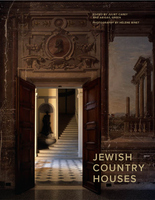
Juliet Carey and Abigail Green, eds.,
Jewish Country Houses.
Brandeis University Press, 2024.
300 pp.; color illus.; endnotes; index.
$60.00 (hardcover)
ISBN: 9781684582204
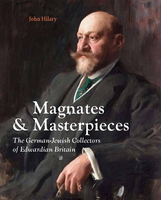
John Hilary,
Magnates and Masterpieces: The German-Jewish Collectors of Edwardian Britain.
Yale University Press, 2025.
336 pp.; 205 color illus.; notes; bibliography; index.
£35.00 (hardcover)
ISBN: 9780300282870
Jewish Country Houses, edited by Juliet Carey and Abigail Green, and Magnates and Masterpieces, authored by John Hilary, tell of how financially successful Jews from roughly the nineteenth century through to World War II used art, architecture, and design to assert their rightful place in the societies from which they had previously been excluded. While Jewish Country Houses focuses on the relationship between Jews and real estate, Magnates and Masterpieces is more concerned with Jews and art collecting. Both, however, follow a similar structure of general introduction or introductory chapter(s), followed by a series of exemplary case studies. In the case of Jewish Country Houses, presumably a careful process of selection was undertaken, given the more than one thousand examples of Jewish country houses uncovered as part of the project. Both publications are exceedingly well illustrated, befitting the fascinating lives and beautiful things described within.
“This book is a work of restoration” (7). While this statement appears at the start of Magnates and Masterpieces, it could aptly be applied to both publications. As meticulously researched exercises in restoration, Jewish Country Houses and Magnates and Masterpieces remind readers that some of the most remarkable country properties in Europe and some of the most hallowed art collections in Britain are indebted to Jewish individuals who have been largely forgotten to history. The books make clear the role Jews played in the making of modern British and European culture as well as the speed with which these legacies were dismantled and then promptly forgotten. It is hard not to interpret this collective forgetting as a manifestation of a particular European discomfort with wealthy Jews.
The challenge for both books is how to engage meaningfully with a story about “rich Jews” without inadvertently falling into antisemitic tropes that pejoratively associate Jews with money. Instead, Jewish Country Houses and Magnates and Masterpieces offer detailed, nuanced, and compelling examples of wealthy Jews who exercised remarkable erudition and taste in the way they bought, restored, and reimagined country properties and sought out and collected fine and decorative arts.
There is some overlap between the two publications, rewarding the act of reading them together. For instance, Magnates and Masterpieces describes the life and collecting practices of Ludwig and Frida Mond. Ludwig Mond made his fortune as an industrial chemist and amassed a remarkable collection of Renaissance art. As first-generation German immigrants in Britain, the Monds rejected their Jewishness. In Jewish Country Houses, we discover that the Mond family faced virulent antisemitism and anti-German sentiment, which inspired their son, Alfred, to turn to Zionism and build Villa Melchett in British Mandate Palestine.
Another point of convergence is the famous, fanciful Gothic castle Strawberry Hill, built for the antiquarian and writer Horace Walpole. Jewish Country Houses details the story of Frances Braham, daughter of the famed Jewish opera singer, John Braham, who became the sole heiress of Strawberry Hill in 1846 following the deaths of her two Waldegrave husbands. (After Walpole, the property passed on to Anne Damer and then to the Waldegrave family.) Frances, now Countess Waldegrave, repaired Strawberry Hill and used the property to honor her Jewish father. There is a case to be made that Countess Waldegrave is the most compelling character in Jewish Country Houses. In Magnates and Masterpieces we learn that, in 1887, Strawberry Hill was inherited by the successful banker Herbert Stern (later Baron Michelham), who, along with his wife Geraldine, transformed the property into an exotic venue for entertaining visitors. While the Sterns retained the furnishings from the Waldegraves, they added a few choice items, including the so-called Napoleon’s armchair, the Essex Ring, and a large marble relief by the Pre-Raphaelite sculptor Thomas Woolner.
Abigail Green, Tom Stammers, and Juliet Carey with Silvia Davoli and Jaclyn Granick, write in the introductory chapter to Jewish Country Houses that “the history of rich Jews remains deeply connected with the history of antisemitism” (36). Questions of social acceptance and exclusion, assimilation, and antisemitism are ever present across both publications, with the main protagonists having to navigate the freedoms afforded by modernity and age-old prejudices that proved remarkably persistent. Since Jewish Country Houses covers examples from France, Italy, Germany, and Czechoslovakia (as well as Britain and the US) the specter of the Holocaust looms large. Tragically, most of the Jewish owners of European country houses only got to enjoy their newly renovated properties and carefully cultivated gardens for a short time before they were forced to flee the Nazis, their houses stolen and repurposed. Now, many of these country houses are museums, memorializing the history of these properties and those who invested hopes and dreams in them.
Jewish Country Houses feels like a melancholy record of forgotten people and lost homes—a feeling that resonates across the poetic, people-less photographs by Hélène Binet that appear throughout. Conversely, Magnates and Museums comes as a relief from the more familiar and overwhelmingly tragic stories of theft, dispossession, and protracted restitution battles that characterize histories of German Jewish art collecting in the twentieth century. One of the implicit aims of Jewish Country Houses, and explicit aims of Magnates and Masterpieces, is to challenge, or at least problematize, the idea that the so-called nouveaux riches’ acquiring of country houses and amassing of art was primarily about purchasing status and buying posterity. The individuals profiled in both books faced prejudices for being Jewish and new money—and sometimes also for being foreigners or women. As wealthy Jews, they constantly risked being stereotyped as money obsessed and devoid of taste. Both books make clear that these “rich Jews” had impeccable taste, directly challenging stereotypes that they were tasteless. Moreover, they were extremely generous, giving huge sums to different philanthropic causes.
Jewish Country Houses features fourteen case studies, some of which are more captivating than others. The first, authored by Stammers and Green, tells of Broomhill outside Tunbridge Wells and the Salomons family, who lived there for over one hundred years. Sir David Salomons was the first Jew to speak in parliament and the first Jewish Lord Mayor of London. But the central figure in this chapter is David Salomons’s nephew, David Lionel Salomons, who moved into Broomhill in 1868, following the death of his father, Philip. Broomhill is significant not only for what it reveals about the Salomons family but also for its place in the history of British science and technology. A keen amateur photographer and scientist, David Lionel built three dark rooms and a science theatre. He also produced an extensive photographic album of the property—its façade, grounds, rooms, and the things it contained—which captures the spirit of scientific experimentation that pervaded the estate.
Villa Stiassni and Villa Tugendhat in Brno (present-day Czech Republic), which Petr Svodoba describes in chapter 12, feel decidedly modern in aesthetic and spirit, especially in comparison to the Gothic and Classical Revival styles that dominate many of the earlier case studies. Hermine Stiassni worked in real estate and selected Ernst Wiesner, an architect who combined Viennese modernism with the sparse style of Adolf Loos, to design Villa Stiassni. For Grete Löw-Beer and her husband Fritz Tugendhat, the design of Villa Tugendhat was a conscious departure from the kinds of splendid houses Grete grew up in. As a result, Grete procured Mies van der Rohe as architect, the outcome being an example of “ingenious minimalism” (284). Svodoba makes the point that “Villa Tugendhat appears to represent a rupture with the tradition of the Jewish country house” (297) because the continuous space on the main floor is ostensibly a private area, not a space designed for hosting. The photographs in this chapter show stark clean lines, smooth surfaces, glass, steel, and a minimal approach to furnishing. One of my favorite images in the book shows Villa Tugendhat when it became part of the Brno University Children’s Hospital, with women in 1950s style two-piece swimsuits doing therapeutic gymnastics with exercise balls.
Questions that nag the reader of Jewish Country Houses, especially chapter 12, are inevitably definitional: What makes a country house Jewish? Is having a Jewish owner or Jewish resident sufficient to claim a property is Jewish? This, of course, mirrors the challenges involved in defining Jewishness more generally. Some of the most compelling case studies in Jewish Country Houses are those in which Jewishness is woven—albeit in subtle and sometimes cryptic ways—into the structures and designs of country houses. These include Ferdinand de Rothschild’s “Renaissance Museum” in Waddesdon Manor, which included religious works and the kinds of portable items associated with Jewish merchants for centuries; the Star of David embedded in the stonework of Ludwig Messel’s Nymans in West Sussex; and, most strikingly, the Star of David motif repeated across the mosaic library floor of Théodore Reinach’s Villa Kérylos on the French Riviera. It is even possible, Henri Lavagne contends, that a bathroom with an octagonal pool at Villa Kérylos resembles a mikveh (Jewish ritual bath). These material traces speak—or rather whisper—of the complex Jewish identities of the buildings’ past inhabitants, their playfulness with cultural symbols, and the “subtle strategies” they adopted in an effort “to manage visibility” (27). These examples exemplify a carefully, skillfully, and creatively curated Jewishness.
With Magnates and Masterpieces, we shift decisively from the countryside to the city. The book describes a group of ultra-successful German migrants of Jewish heritage, primarily in London, during the final decades of the nineteenth and early decades of the twentieth centuries and their remarkable collections of fine and decorative arts. It combines biographical information with collection histories to show how and why Ludwig and Frida Mond, Alfred Beit, Leopold and Mathilde Hirsch, Edgar and Leonora Speyer, Henry and Clara Oppenheimer, Ernest Cassel, Carl and Adèle Meyer, Sigismund and Ludwig Neumann, Max Michaelis, Henry and Clarisse Bischoffsheim, Herbert and Geraldine Stern, and Max and Maurice Rosenheim, amassed wealth, status, and art. While motivations can be complex and hard to pin down, Hilary convincingly argues that these collectors were inspired by the German humanistic Enlightenment ideal of Bildung, which emphasized education, learning, and the cultivation of an aesthetic sensibility.
The stories in Magnates and Masterpieces play out against the backdrop of a unified and militaristic Germany, which was becoming increasingly hostile to Jews. By contrast, Britain proved socially, economically, and culturally hospitable. After all, several of the figures featured in Magnates and Masterpieces enjoyed the patronage and friendship of the Prince of Wales turned King Edward VII, with Ernest Cassel being one of the last non-royals to have a private audience with the King on his deathbed. The rise of Benjamin Disraeli, a Jewish convert to Christianity, was seen as a good sign for assimilated German Jews with professional ambitions. (Disraeli’s Hughenden Manor appears as the second case study in Jewish Country Houses.) It is worth reflecting on the fact that at precisely this historic moment, Russian and Eastern European Jews were arriving in large numbers to London’s East End—an aspect of the British Jewish experience that seems to have had a negligible impact on the community of German Jewish collectors who represented the opposite end of the economic and religious spectrum. However, World War I and the sinking of the RMS Lusitania had a massive, catastrophic effect. Despite their professional successes, political connections, and cultural influence in England, as German migrants with Germanic names (and presumably German accents), most of the collectors featured in Hilary’s book were aggressively targeted when Britain and Germany became enemies. The most successful collectors were also the most aggressively targeted, with both Edgar Speyers and Ernest Cassel being falsely accused of espionage.
As an exercise in restoration, Magnates and Masterpieces reveals the importance of this group of collectors to histories of British (and also Irish, German, and South African) national collections. As Hilary reveals, Ludwig and Frida Mond, along with Henriette “Harry” Hertz, amassed a staggering collection of Renaissance art, which was bequeathed to the National Gallery in London. The National Gallery’s collection of Early Italian and Renaissance art would not be what it is if not for the Mond bequest, although this is hardly known today. Max and Maurice Rosenheim proved to be avid and astute collectors of art and artifacts, medals and coins, clocks, dials and astronomical instruments, bronzes, ceramics, maiolica, bookplates, and far beyond. Moreover, Max Rosenheim became a recognized connoisseur and art historian, making clear the interconnectedness of these collecting practices and the development of art history as an academic discipline. The British Museum was the primary benefactor of the Rosenheims’ collecting practices. While the Monds and Rosenheims stand out, the high level of giving—both in terms of the gifting of art and artifacts, and philanthropic donations to British galleries, museums, arts organizations, and charities—is characteristic of all twelve collectors spotlighted in this book.
As becomes increasingly evident as Magnates and Masterpieces unfolds, this is not just the story of Germany and England; it is also the story of South Africa. From the outset, Hilary makes clear that several of the collectors profited from the diamond fields of Kimberley and gold mines of the Rand. A number can even be classified as Randlords. In terms of art, the connection between Germany, Britain, and South Africa is made clearest via the example of the Michaelis Collection. No longer feeling at home in England, Max and Lilian relocated to Newlands, outside Cape Town, and engaged in a “sustained programme of cultural patronage in South Africa” (196). Of particular note is their gift to create a gallery of seventeenth-century Dutch and Flemish artworks in the Old Town House, Cape Town. While undoubtedly a monumental act of charitable giving, this gift was not without controversy, given the symbolism of Dutch painting in the context of South Africa’s settler history.
Men who were successful in business, finance, and industry take center stage in Jewish Country Houses and Magnates and Masterpieces, but both books include fascinating female protagonists: Vera Salomons, who bequeathed Broomhill to Kent County; Frances, Lady Waldegrave, noted above; Alice Franchetti (née Hallgarten), who set up a school at Villa La Montesca; Henriette Hertz, who was a long-standing friend and adviser to the Monds; accomplished violinist Leonora Howland (née von Stosche), who married Edgar Speyer; and Aimée Geraldine Stern (née Bradshaw) or Lady Michelham, Herbert Stern’s much younger wife who served as a Red Cross nurse during World War I and would become romantically entangled with the dubious Jeff Cohn. Max Michaelis’s two working-class British wives—Ninon Rydon and Elizabeth or Lilian Button—introduce an additional layer of complexity to the life story of the successful Randlord. It is difficult to extricate the aesthetic preferences and artistic choices of wives from their husbands during this period, but clearly women had an impact on the hosting, decorating, and collecting practices described in these books.
Unsurprisingly, the foremost unresolved issue in Magnates and Masterpieces is the Jewishness of its main protagonists. Hilary provides evidence of the Jewish heritage of all twelve principal collectors, but the book quickly becomes the story of Jewish assimilation in its most extreme form. Some converted to Christianity; the majority married non-Jewish women; many baptized their children into the Christian faith. In some cases, their only outward assertion of Jewish identity came at the time of their death, with burial in a Jewish cemetery, although several were buried in churchyards and one was cremated. Given the preference for Old Master paintings among the collectors profiled, these German Jewish collectors had all manner of Christian imagery in their homes. One might have assumed that these wealthy and well-connected Jews would have collected Judaica—they did not. Here I was prompted to recall my own German Jewish ancestors who fled the Nazis with their Shabbat lamps, one of which now hangs in the entrance to my home in Canberra.
This returns us to the difficult terrain navigated in Jewish Country Houses. There is a case to be made that the penultimate case study—Trent Park—is the most remarkable, so much so that the US postscript that follows feels anticlimactic. Helen Fry describes how, following its acquisition by Sir Philip Sassoon in 1912, Trent Park was used for lavish and theatrical parties and as a haven for gay men (like Sassoon). Sassoon died in June 1939, and in October of that year Trent Park was requisitioned by British Intelligence under the auspices of the War Office to house captured, top-ranking German officers. Lulled into a false sense of luxury by Trent Park, the German generals shared secret information that made a decisive difference to the success of the British war effort. Ironically, this country house inhabited by Nazis became the most Jewish: the decorative scheme, imagined by one of its Jewish owners, was utilized to disguise recording devices, and it was German-speaking Jewish refugees who listened to German generals boasting about the number of Jews they had murdered and the atrocities committed in Nazi death camps, sometimes against the family members of their “secret listeners.” The triumph and tragedy, hope and loss embedded in the walls of Trent Park make it, above all, a Jewish country house.